
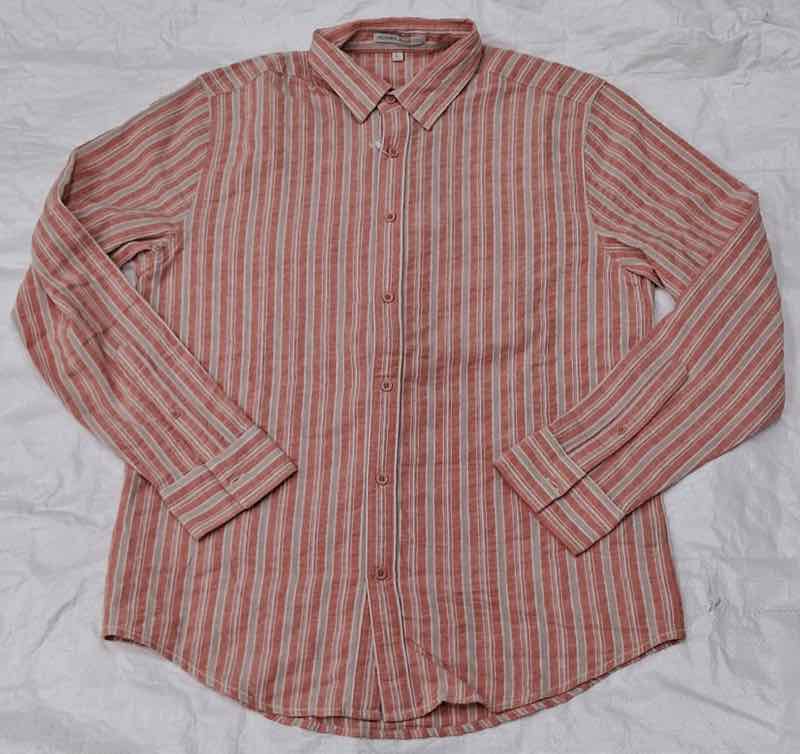
Choosing the right formal shirt
Every good outfit is built outwards from the shirt. It touches the face, frames the tie and shows at the collar and cuffs even under a jacket, so it is worth choosing with more care than any other piece. Before colour or pattern, ask four questions in this order.
- Where will you wear it? A boardroom, a client lunch and a family function ask for different levels of formality. Plain and finely striped shirts sit at the top; checks and textures in the middle; prints and half sleeves at the relaxed end.
- Which colours suit you? White and light blue flatter almost everyone. Deeper complexions look superb in crisp white and pale pink; fair complexions often suit mid-blues better than stark white.
- Which fit suits your build? Fit matters more than price or brand. Read chapter 02, or the full fits & tailoring sheet.
- Which cloth suits the climate? For Mumbai, breathable cotton poplin, fine twill and cotton-linen blends outperform heavy weaves. See fabrics & construction.
Do
- Build around plain white and light blue first.
- Try a shirt on with the top button fastened.
- Raise your arms — the shirt should stay tucked.
Avoid
- Buying for the occasion you have once a year.
- Shiny synthetic fabrics in hot weather.
- Choosing by collar size alone; check shoulders too.
Understanding fits
Three cuts cover most men's formal shirts. A slim fit follows the body closely, with a marked taper from chest to waist; it suits lean builds and looks sharp under a fitted suit. A regular fit falls straight from the chest, gives freedom to move and breathes well on humid days. A tailored fit sits between them — some shaping at the waist without cling.
Whatever the label, judge the shirt on your body. The shoulder seam should meet the edge of your shoulder bone. You should be able to slide two fingers inside the fastened collar. Buttons should lie flat across the chest without pulling into an X-shape, and the hem should stay tucked when you sit and reach.
Choosing collars
The collar frames your face and decides which tie knot you can wear. The key measurement is spread — the distance between the collar points. Narrow spreads lengthen a round or broad face; wide spreads balance a long, narrow one and make room for a fuller knot.
PointNarrow spread, long points. Classic and slimming; pairs with a small four-in-hand knot. SpreadThe modern business standard. Takes a half-Windsor and looks right open or with a tie. CutawayPoints swept far back. Dramatic and formal; needs a full Windsor or a thick tie. Button-downPoints buttoned to the shirt front. The most relaxed collar — best with blazers or no tie. BandA stand with no leaves. Never with a tie; reserved for relaxed and festive wear.
Understanding cuffs
Cuffs are the detail people notice when you shake hands, sign a document or reach across a table. Most business shirts for men have a button cuff; the others are a step up in formality and a chance to wear a watch or cufflinks well.
Barrel / buttonSingle-layer cuff fastened with one or two buttons. The everyday standard. French / doubleA long cuff folded back on itself and closed with cufflinks. The most formal choice. ConvertibleHas buttons and a cufflink hole, so it can be worn either way. MitredA button cuff with its corners cut at an angle — a quietly dressier finish.
Shirt and trouser coordination
The simplest rule: keep the trouser darker than the shirt. A light shirt over a mid or dark trouser draws the eye upward to the face and looks deliberate. Reverse it — dark shirt, pale trouser — and the outfit tends to look top-heavy unless it is clearly casual.
Then match temperature. Cool shirts (white, blue, grey, lilac) suit cool trousers (navy, charcoal, grey). Warm shirts (cream, pink, camel, rust checks) can take warm trousers (beige, brown, olive) as well.
- Navy
- Charcoal
- Mid-grey
- Beige
- Navy
- Charcoal
- Stone
- Brown
- Navy
- Grey
- Charcoal
- Charcoal
- Black
- Olive
- Charcoal
- Black
- Mid-grey
White shirt styling
White formal shirts are the foundation of men's formal wear: the most formal colour a shirt can be, and the one that works with every suit and tie. Because a white shirt hides nothing, quality shows — look for an opaque cloth, a collar that holds its shape and buttons sewn firmly.
- Look ABoardroom
- White poplin, spread collar, navy or charcoal suit, solid navy or burgundy tie, black oxfords.
- Look BEvening
- White with French cuffs, charcoal or black suit, dark silk tie or none, silver cufflinks.
- Look CWeekend smart
- White oxford or linen-blend, sleeves turned twice, beige or olive chinos, brown loafers.
Blue shirt styling
Blue formal shirts are slightly less formal than white and far more forgiving: they flatter most complexions and are kinder to long, hot days. Think of blue as a scale. Sky blue is the office classic and pairs with any suit. Mid-blue is bolder; keep the tie darker, in navy, burgundy or brown. Deep and navy blue shirts are for evenings and relaxed settings, usually without a tie.
Blue-and-white checks and stripes extend the family. Treat them like a light blue shirt, but choose a solid tie so the pattern has the stage to itself.
- SkyOffice classic
- MidBolder, darker tie
- DeepEvening, open collar
- NavyAfter dark, relaxed
Striped shirt styling
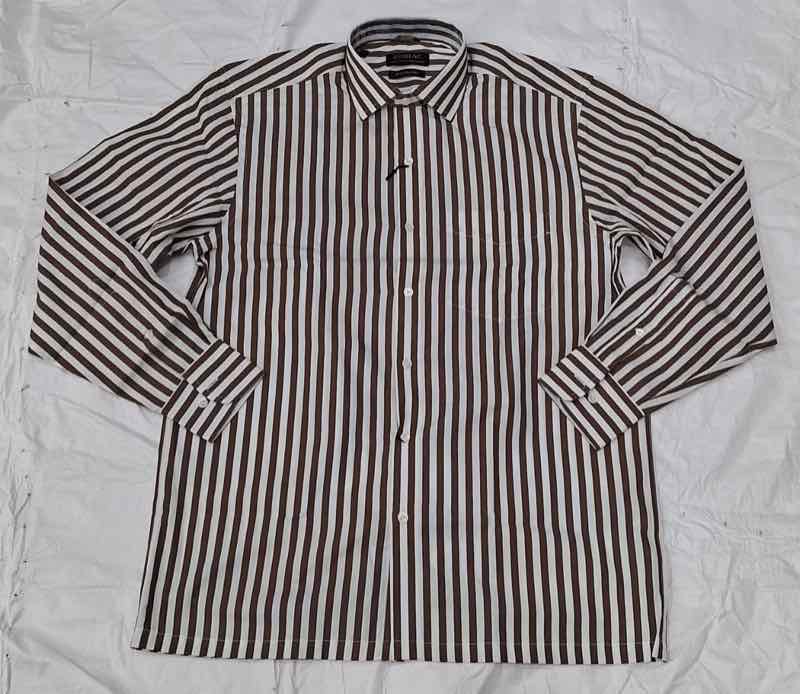
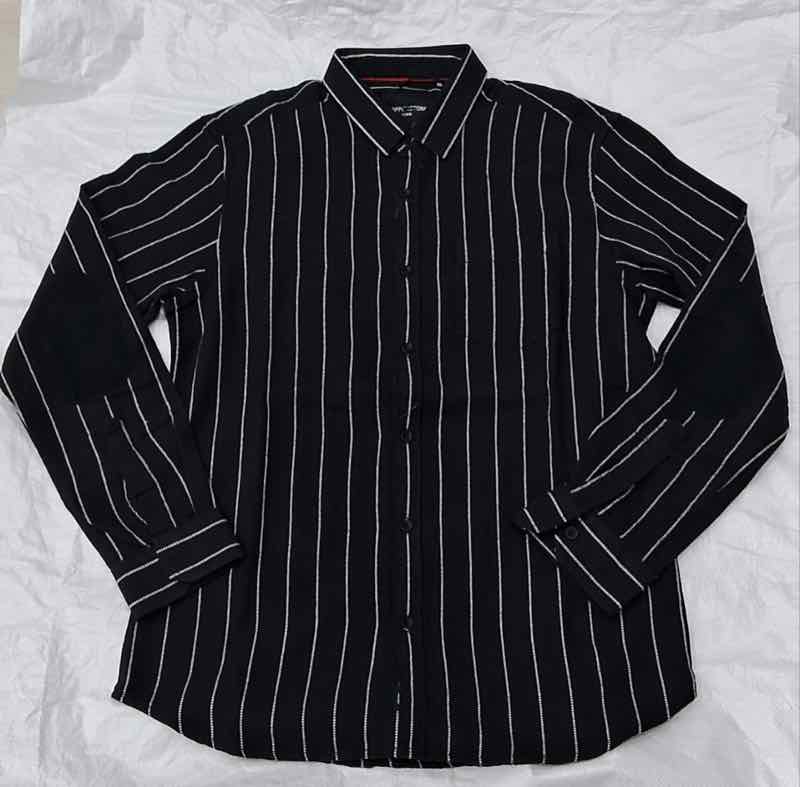
Stripes add height and energy. The finer and closer the stripe, the more formal the shirt: a hairline or pencil stripe can go to a board meeting; a bold, widely spaced stripe is for a creative office or a weekend. Stripe colour matters too — blue and grey are the most businesslike, while coral, brown and other warm stripes feel lighter and more summery.
The rule for pairing is contrast of scale. Wear a striped shirt with a solid tie, or with a tie whose pattern is clearly larger or smaller than the stripe. With a pinstriped suit, choose a shirt with a much finer stripe or a plain shirt.
Do
- Pick a tie colour from the stripe.
- Keep the suit plain or very subtly patterned.
- Choose fine stripes for interviews and presentations.
Avoid
- Two stripes of the same width together.
- Very fine stripes on camera — they can shimmer.
- Bold stripes under a tie at formal events.
Suit combinations
Three suit colours carry most professional wardrobes, and each has its natural shirts. Start with these and the combinations multiply quickly: two suits, four shirts and four ties already make more than thirty distinct outfits.
| Suit | Best shirts | Ties |
|---|---|---|
| Navy | White, light blue, pale pink, fine blue stripe | Burgundy, deep green, silver-grey, navy pattern |
| Charcoal | White, light blue, lilac, subtle check | Navy, burgundy, black for evening |
| Mid-grey | White, light blue, pink, blue stripe | Navy, burgundy, brown knit |
| Beige / tan | White, sky blue, light check | Brown, navy, olive |
Tie coordination
A tie should be darker than the shirt, and its pattern should differ in scale from any pattern in the shirt. The tip should just reach the top of the belt buckle. The two schedules below cover colour and knot.
| Shirt | Works with | Take care with |
|---|---|---|
| White | Any colour; navy, burgundy and black are the most formal | Very pale ties, which disappear |
| Light blue | Navy, burgundy, brown, deep green, gold | A tie in the same light blue |
| Pale pink | Navy, charcoal, deep green, grey | Red and bright pink |
| Striped | Solid, knit, or a larger-scale pattern | Stripes of the same width |
| Checked | Solid, grenadine or knit textures | Small checks and busy prints |
| Dark / black | Tonal silk, or no tie | Bright contrast ties |
| Collar | Knot | Why |
|---|---|---|
| Point (narrow) | Four-in-hand | A slim, slightly asymmetric knot fits the small gap |
| Semi-spread | Four-in-hand or half-Windsor | The most versatile pairing |
| Spread | Half-Windsor | A medium, symmetrical knot fills the space |
| Cutaway | Full Windsor | A wide knot balances the wide opening |
| Button-down | Four-in-hand, or none | Relaxed collar, relaxed knot |
| Band | No tie | There is no collar to hold one |
Formal wardrobe essentials
A working week needs fewer shirts than most men own — but the right ones. This checklist gives five days of rotation with room to wash, plus cover for the events that interrupt a normal week.
- Two plain white shirts, spread or semi-spread collar
- Two light blue shirts, one plain, one fine stripe or end-on-end
- One pale pink or lilac shirt for variety
- One subtle check or textured shirt for Fridays and travel
- One white shirt with French cuffs for formal evenings
- One dark or detailed shirt for special occasions
- Two trousers: navy and charcoal; one suit in navy or charcoal
- Three ties: navy, burgundy, one textured knit
Beyond the formal core — know the difference
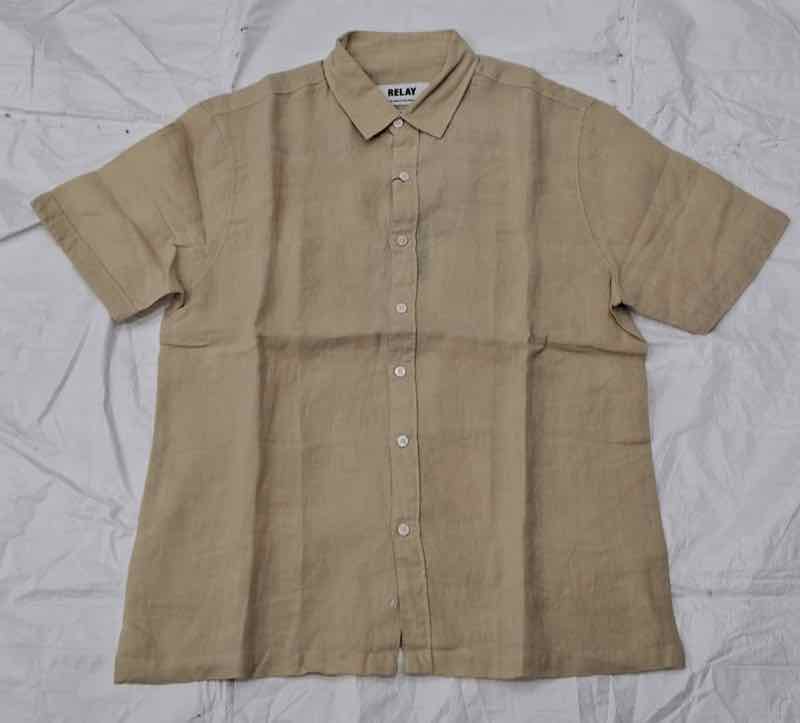
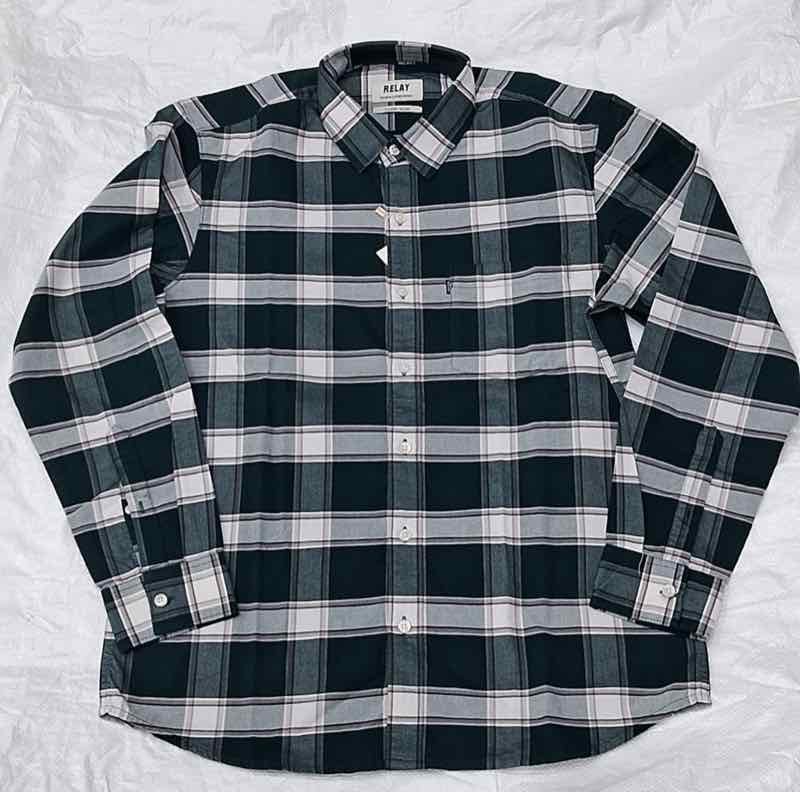
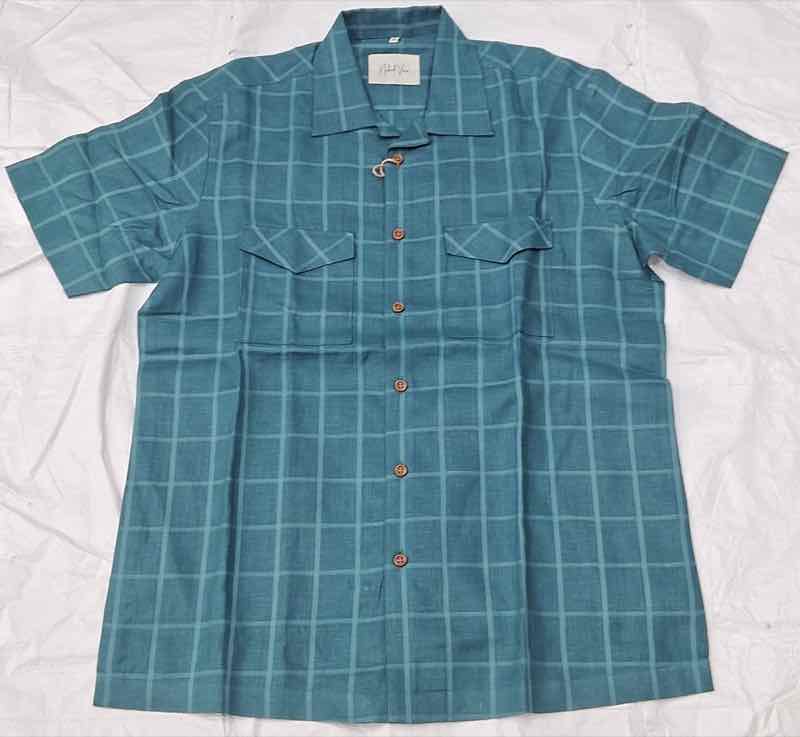
These shirts are smart-casual rather than formal: half sleeves, chest pockets, flannel-style checks and textured weaves. Wear them with chinos at weekends, not under a suit.
Shirt care
A well-kept shirt lasts years longer and always looks newer than it is. In Mumbai's humidity, the enemies are sweat, strong sun and heat. Follow these steps after every wear.
Unbutton fully
Undo every button, including cuffs and collar points, before washing to protect buttonholes and avoid twisted seams.
Pre-treat collar and cuffs
Rub a little liquid detergent into the collar band and cuffs, where sweat and grime collect first.
Wash cool, whites apart
Use a gentle cycle at 30–40 °C. Wash whites separately to keep them bright, and turn dark or embroidered shirts inside out.
Dry in shade
Hang on a shaped hanger and dry away from direct sun, which yellows whites and fades colours. Avoid a hot tumble dryer.
Iron while slightly damp
Collar first (underside, then top), then cuffs, sleeves, yoke, back and fronts. Iron around buttons, not over them.
Hang with space
Fasten the top button and leave room between hangers so the cotton can breathe; fold knit and travel shirts instead.
Quick answers
- What colour formal shirt should I buy first?
- A plain white shirt, followed closely by a light blue one. Between them they work with navy, charcoal and grey suits, with every tie colour, and at every level of formality from a daily office to an evening function.
- Should a formal shirt be slim fit or regular fit?
- Choose by build and comfort rather than trend. Slim fit formal shirts suit lean frames and sit close at the waist; regular fit formal shirts give more room through the chest and stomach and are cooler in Mumbai heat. In either case the shoulder seam should sit on the edge of your shoulder.
- Which collar should I wear with a tie?
- A semi-spread or spread collar is the most versatile choice with a tie. Narrow point collars suit slimmer knots such as the four-in-hand, while wide spread and cutaway collars need a fuller knot such as a half-Windsor or Windsor to fill the space.
- Can I wear a button-down collar with a suit?
- It works with a soft, unstructured suit or a blazer in a relaxed office, but a button-down is the least formal collar. For boardrooms, interviews and evening events choose a point, semi-spread or spread collar.
- How should a formal shirt sleeve fit?
- With your arms relaxed, the cuff should reach the base of your thumb, and about one to one and a half centimetres of cuff should show beyond a jacket sleeve. The cuff should be snug enough not to slide over your hand.
- How do I stop white shirts turning yellow?
- Wash them after every wear, before sweat and deodorant set in the fabric; wash whites separately; avoid very hot water and excessive bleach; and dry them in shade rather than strong sun.